Executive Summary
Trauma centers are often misclassified as cost centers. In reality, they are enterprise-level growth engines that drive revenue, margin expansion, and market dominance.
• 15–30% increase in Case Mix Index (CMI)
• 2–4x downstream revenue per patient episode
• Improved utilization of ICU, OR, and imaging assets
• Sustained market share growth through EMS routing
• Increased quality of care through the system, decreased complications and mortality
Trauma is not a service line, it is a system-wide financial, quality and strategic platform.
Financial Value Creation Model
Trauma programs generate value across index admissions, inpatient services, and downstream care. More than 50% of revenue occurs after discharge.
Margin Expansion Mechanics
Trauma increases hospital-wide CMI and concentrates high-margin cases. Improved utilization lowers cost per case.
Market Share and Growth
EMS routing directs high-acuity patients to trauma centers, establishing consistent volume.
Payer Mix Optimization
Includes commercial insurance, workers’ compensation, and auto liability revenue streams.
Strategic Positioning
Creates barriers to entry, elevates brand, and supports recruitment.
JPS Health Network Case Study
Level I trauma program drove regional dominance, increased ICU/OR utilization, and expanded downstream services. Net $100,000,000.00 to the income of the Network.
Risk and Mitigation
Risks include uncompensated care and utilization; mitigated through triage optimization, Medicaid subsidy and state trauma subsidies.
ROI Framework
Break-even by Year 2; margin expansion thereafter.
CEO Dashboard Metrics
CMI, margin per case, ICU/OR utilization, downstream revenue, transfer capture.
Conclusion
Trauma programs are enterprise growth platforms that drive revenue, margin expansion, and competitive advantage.
References
1. American College of Surgeons Committee on Trauma. Resources for Optimal Care of the Injured Patient. Chicago, IL.
2. MacKenzie EJ, Rivara FP, Jurkovich GJ, et al. A national evaluation of trauma-center care. N Engl J Med. 2006;354:366–378.
3. Carson JL, Guyatt G, Heddle NM, et al. Clinical practice guidelines for red blood cell transfusion thresholds. JAMA. 2016.
4. Meybohm P, Froessler B, Goodnough LT, et al. Simplified international recommendations for patient blood management. Anesthesiology. 2017.
5. Agency for Healthcare Research and Quality. Healthcare Cost and Utilization Project (HCUP).
6. Centers for Medicare & Medicaid Services. MS-DRG Classification System.
7. American College of Surgeons Trauma Quality Improvement Program (TQIP) Annual Reports.
8. Vizient Clinical Data Base Reports on trauma and hospital performance.
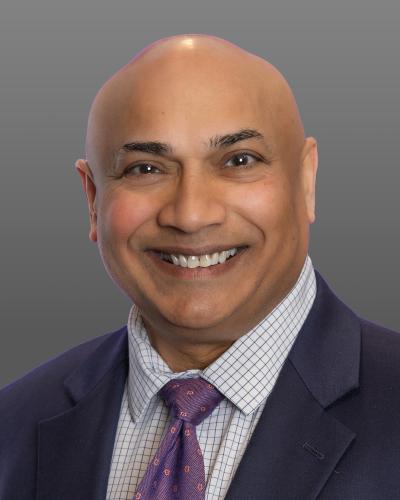
About Dr. Rajesh R. Gandhi
• Professor of Medical Education
• Healthcare Leadership Advisor
• Executive Coach
• Executive Search Consultant
Dr. Rajesh R. Gandhi joined AGB Search as an Executive Search Consultant in 2026. Dr. Gandhi is a trauma surgeon, educator, and healthcare systems leader with extensive experience building clinical and academic programs within complex healthcare organizations. He retired from clinical practice in 2024 after 17 years as Trauma Medical Director at JPS Health Network in Fort Worth, Texas, where he led the hospital’s designation as Tarrant County’s first Level I Trauma Center. His leadership emphasized multidisciplinary collaboration, culture change, and systems-based quality improvement across trauma and surgical services.
He currently serves as Professor of Medical Education at the Anne Burnett Marion School of Medicine at TCU. His work focuses on physician leadership development, executive coaching, faculty mentoring, and strengthening academic medicine through thoughtful recruitment and organizational development.
Representative Leadership Impact
• Led the successful development and verification of the first Level I Trauma Center in Tarrant County at JPS Health Network, building multidisciplinary physician and clinical teams within a large county hospital system.
• Established Texas’ first Patient Blood Management program, improving clinical outcomes and advancing evidence-based blood conservation strategies across surgical and trauma services.
• Developed the only Geriatric Trauma Program in Tarrant County, integrating multidisciplinary care models for high-risk elderly trauma patients.
• Helped establish one of the nation’s first Emergency General Surgery Centers of Excellence, advancing systems-based care for acute surgical patients.
• Built a regional trauma referral network across North and West Texas, expanding access to advanced trauma care for rural and community hospitals.
• Recruited trauma surgeons and key subspecialty partners—including neurosurgery, orthopedic surgery, otolaryngology (ENT), and urology—to strengthen multidisciplinary trauma capacity.
Areas of Advisory Expertise
• Academic medical leadership and physician executive development
• Department chair and clinical leadership recruitment
• Graduate medical education and faculty development
• Trauma system development and multidisciplinary program building
• Healthcare quality improvement and patient safety systems
• Executive coaching for physicians, educators, and healthcare leaders
Leadership and Recruitment Experience
• Recruitment of trauma surgeons supporting trauma program development in Waco and Fort Worth, Texas
• Recruitment of subspecialty partners including neurosurgery, orthopedic surgery, otolaryngology (ENT), and urology
• Leadership of multidisciplinary physician teams supporting Level I Trauma Center verification
• Development of a regional trauma referral network across North and West Texas
• Implementation of Texas’ first Patient Blood Management program within a county hospital system
• Establishment of one of the nation’s first Emergency General Surgery Centers of Excellence programs
Academic and Professional Leadership
During his tenure as Trauma Medical Director at JPS Health Network from 2007 to 2024, Dr. Gandhi advanced a culture of accountability, collaboration, and performance improvement among surgeons, nurses, and hospital staff. His leadership resulted in the development of innovative programs including the county’s only Geriatric Trauma Program and Texas’ first Patient Blood Management initiative.
Earlier in his career he served as Trauma Medical Director in Waco, Texas, where he strengthened trauma services and aligned clinical teams around shared standards of excellence. Throughout his career he has been deeply engaged in graduate medical education, mentoring medical students, general surgery residents, surgical critical care fellows, emergency medicine residents, and other healthcare trainees.
Professional Service
• Trauma Center Surveyor – Texas Emergency Trauma and Acute Care Foundation (2009–present)
• Trauma Center Surveyor – American College of Surgeons (2011–2025)
• Trauma Center Consultant - Advised Baylor Scott & White Medical Center – Grapevine on achieving a Level II Trauma Center designation
• Board service with nonprofit organizations supporting community health and education
Training
• General Surgery at New York Medical College/Westchester County Medical Center
• Fellowship in Adult and Pediatric Trauma and Surgical Critical Care at The University of Pennsylvania Hospital and The Children’s Hospital of Philadelphia
Education
• Ph.D., Physiology – Albany Medical College
• M.S., Physiology – Albany Medical College
• M.D. – Albany Medical College
• B.S., Applied Biology – Massachusetts Institute of Technology